Now available: Explore the Demand-Side Pathways Model
The initial release of the BDA-DSPM is now available on the Energy Modeling Hub. We invite researchers, planners, and policy analysts to explore the model and share feedback as we continue to enhance its capabilities.
Demand-Side Pathways Model
We’re putting Canada on a path to a strong, competitive economy in a world driving to reduce emissions to carbon neutrality. Central to this vision is a future where electrified buildings are part of an affordable and resilient energy system. Achieving this requires robust tools to inform strategic investments in the energy system.
The Building Decarbonization Alliance’s Demand-Side Pathways Model (DSPM) is an open-source scenario analysis platform that allows users to explore how changes in Canada’s building stock could shape energy demand, emissions, and peak loads. Users define their own assumptions about technology adoption and policy environments, then explore the resulting energy outcomes for the residential and commercial building sectors under different pathways.
Developed as part of the Transition Accelerator’s open modelling ecosystem, the BDA-DSPM is designed to enhance transparency, foster collaboration among stakeholders, and accelerate the deployment of effective decarbonization policies.
What the model enables
The BDA-DSPM is a bottom-up energy end-use model that comes with a user-friendly, web browser-based interface. This interface guides users through three key steps:
- Select the building stock within scope for analysis
- Define scenarios based on projected changes to the building stock (via demolitions, envelope upgrades, or new construction) and technology uptake under different economic or regulatory environments
- Assign contextual information such as energy costs and emissions rates
For expert users seeking greater control, the underlying code and DSPM Data Library are fully accessible, enabling extensive customization of all model inputs.
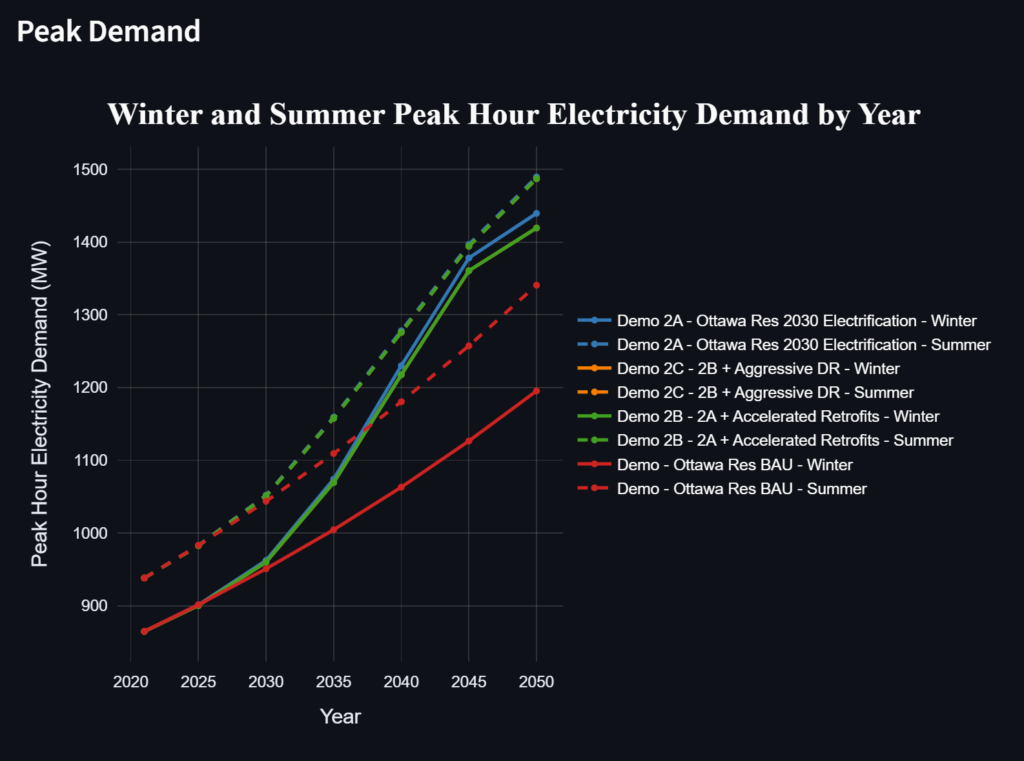
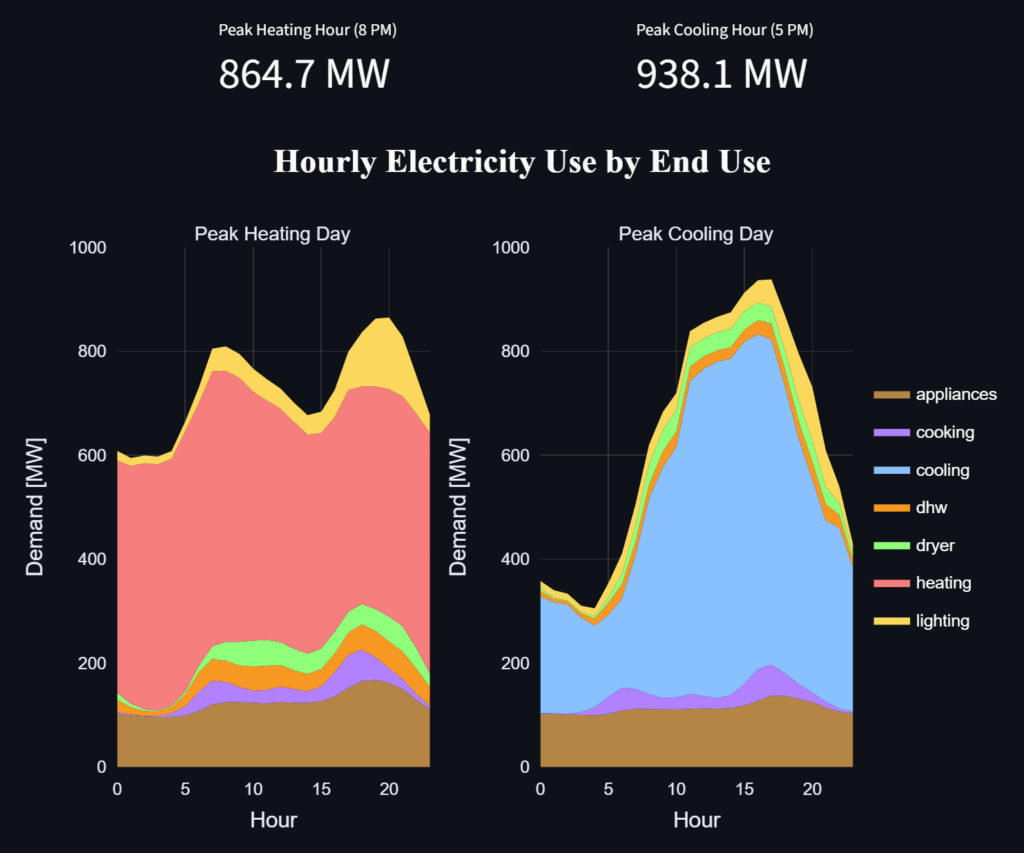
Users can independently analyze consumption, peak demand, and emissions, with results explorable across multiple dimensions including geographic region, sector, energy source, building type, envelope performance, equipment type, and forecast year.
Key features
Flexible scope: Analyze results by province, climate zone, or major Census Metropolitan Area (CMA), and by sector (residential or commercial)
Scenario modelling: Explore how building demolitions, envelope upgrades, new construction, and equipment adoption affect energy outcomes over time
DSPM Data Library: Comes pre-populated with input data on the Canadian building stock, segmented by climate zone, province, and CMA, plus supporting datasets aligned with credible sources (e.g., Canadian Energy Regulator 2021 & 2023)
Open and transparent: Inputs and methods are fully accessible for review, revision, and customization
Extensible: Expert users can create customized inputs and are encouraged to open-source their data for the broader community

Ongoing development
The BDA-DSPM is under active development. We are continuing to enhance the model’s functionality and usability, including work toward a streamlined, web-based interface that will make it easier for both technical and non-technical users to define scenarios, run analyses, and visualize results.
We welcome feedback from users as we refine the platform. Your input helps shape the tool’s evolution and ensures it meets the needs of the research and policy community.
Get involved
We are actively engaging with potential users to ensure the model supports real-world applications in policymaking and utility planning contexts. If you are exploring similar questions in your own work—whether assessing the energy system impacts of decarbonization policies or analyzing demand under different market scenarios—we welcome the opportunity to learn more about your use case. We also invite organizations with relevant data to contribute to the DSPM Data Library, helping strengthen this public resource for the broader community.
Stay Updated: We’re continuously adding new features and improving usability. Sign up to receive updates on new releases and opportunities to engage with the BDA-DSPM community.
For inquiries, assistance with custom inputs, or to discuss potential collaboration, contact us at dspm@buildingdecarbonization.ca