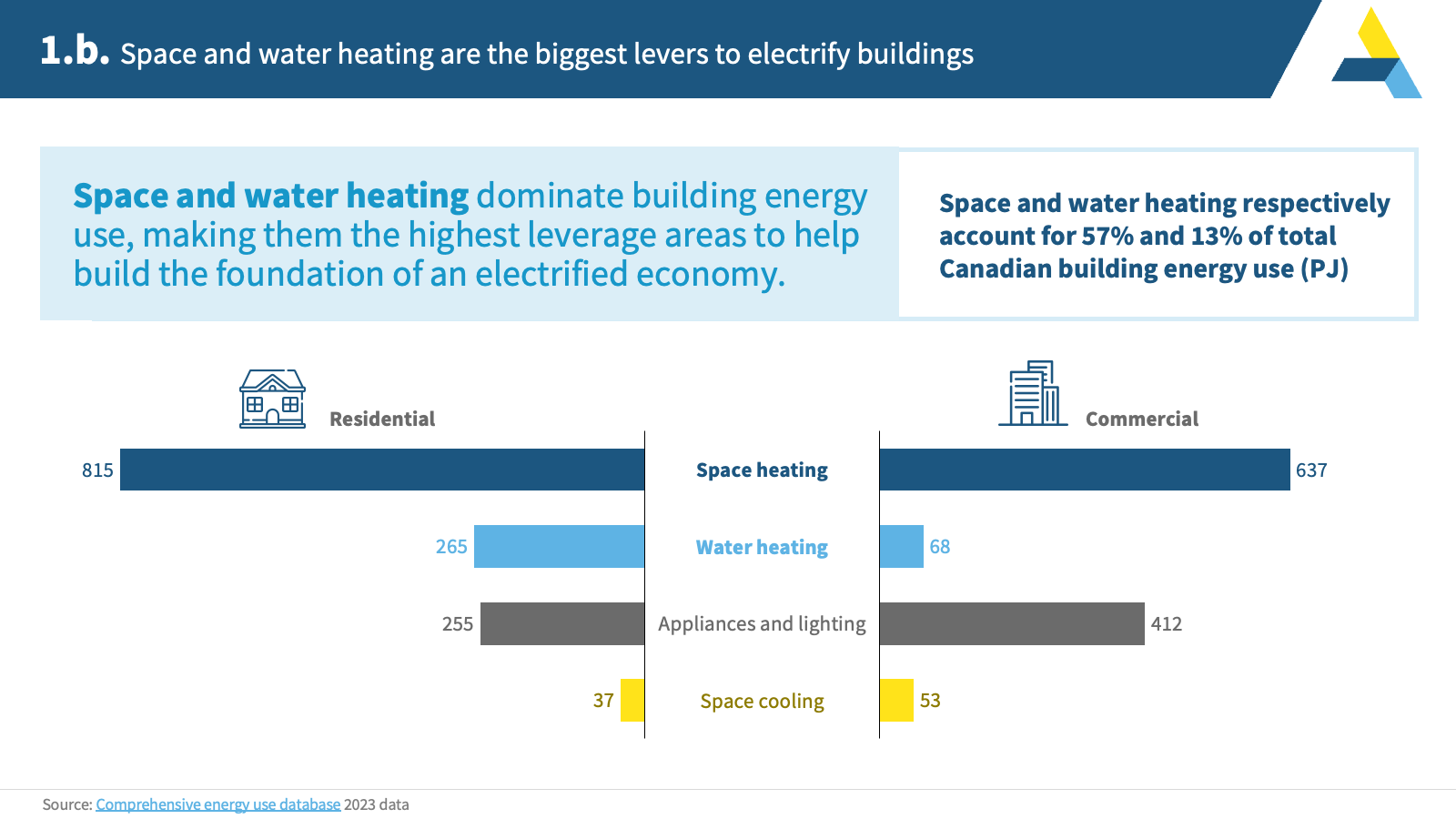
Space and water heating are the largest sources of end-use energy demand in Canada’s buildings, and one of the highest leverage areas for decarbonizing the sector. But are we on track to lay the foundations for an electrified economy?
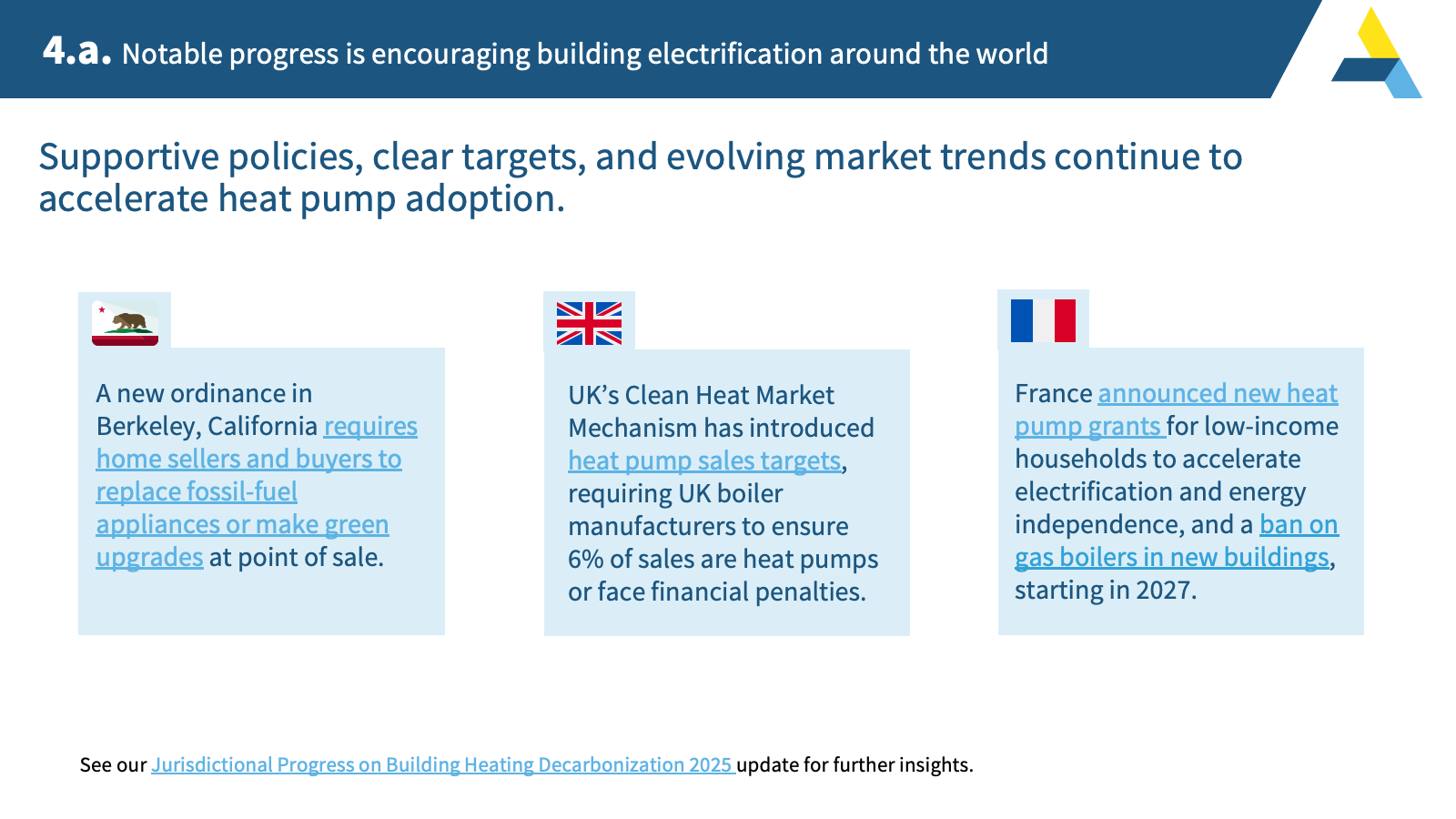
Our 2026 State of Play shows the state of electrification across Canada in one condensed slide deck, providing a clear snapshot of heat pump adoption as it stands today. It also looks at the pace of progress for electrification: where it’s on track, where it’s too slow, and how supportive policies, clear targets, and evolving market trends continue to accelerate heat pump adoption.
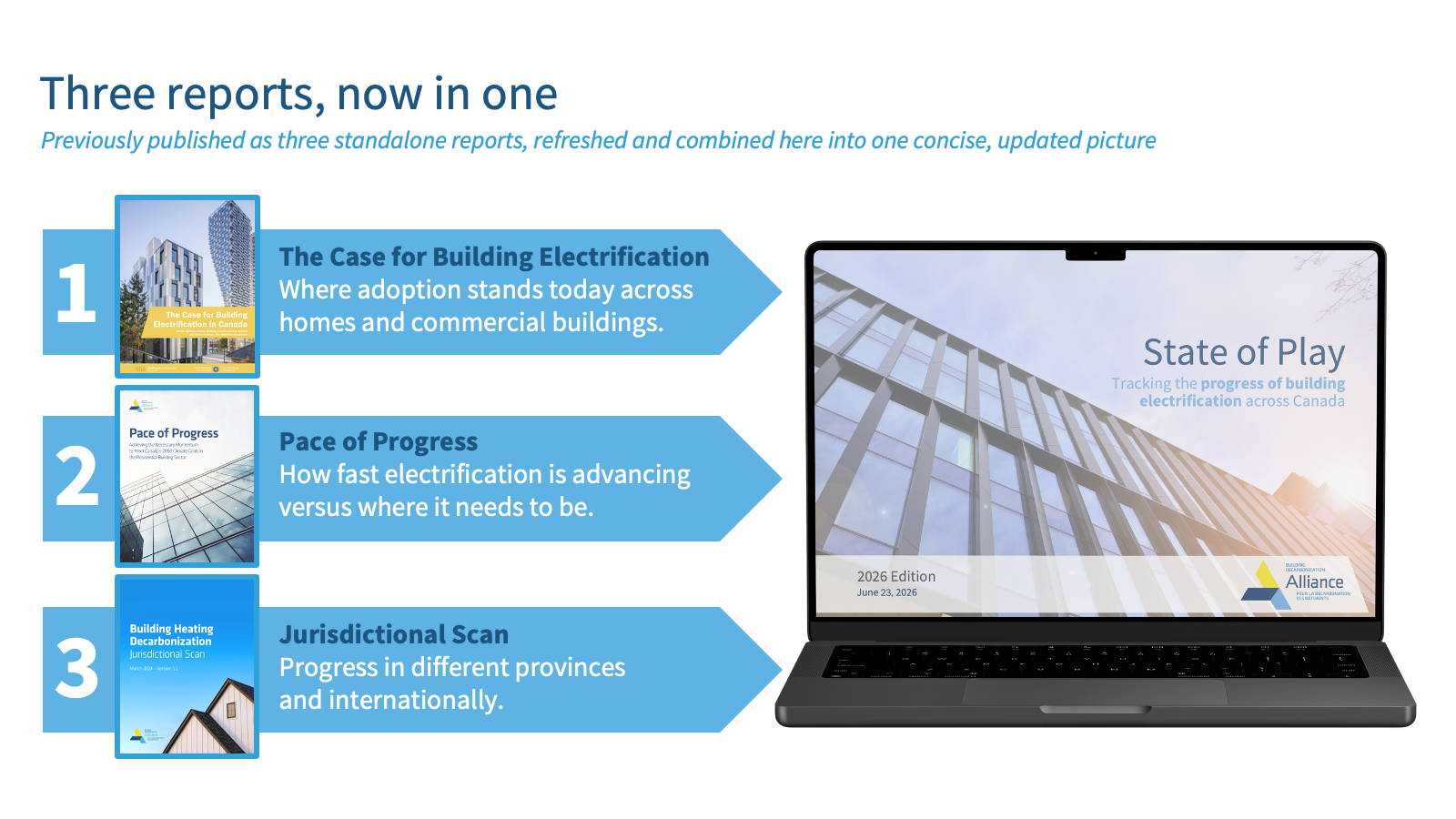
Combining our Case for Building Electrification, Pace of Progress, and Jurisdictional Scan reports into one concise, updated picture, the State of Play is an at-a-glance look at how building electrification is progressing across Canada.



Takeaways
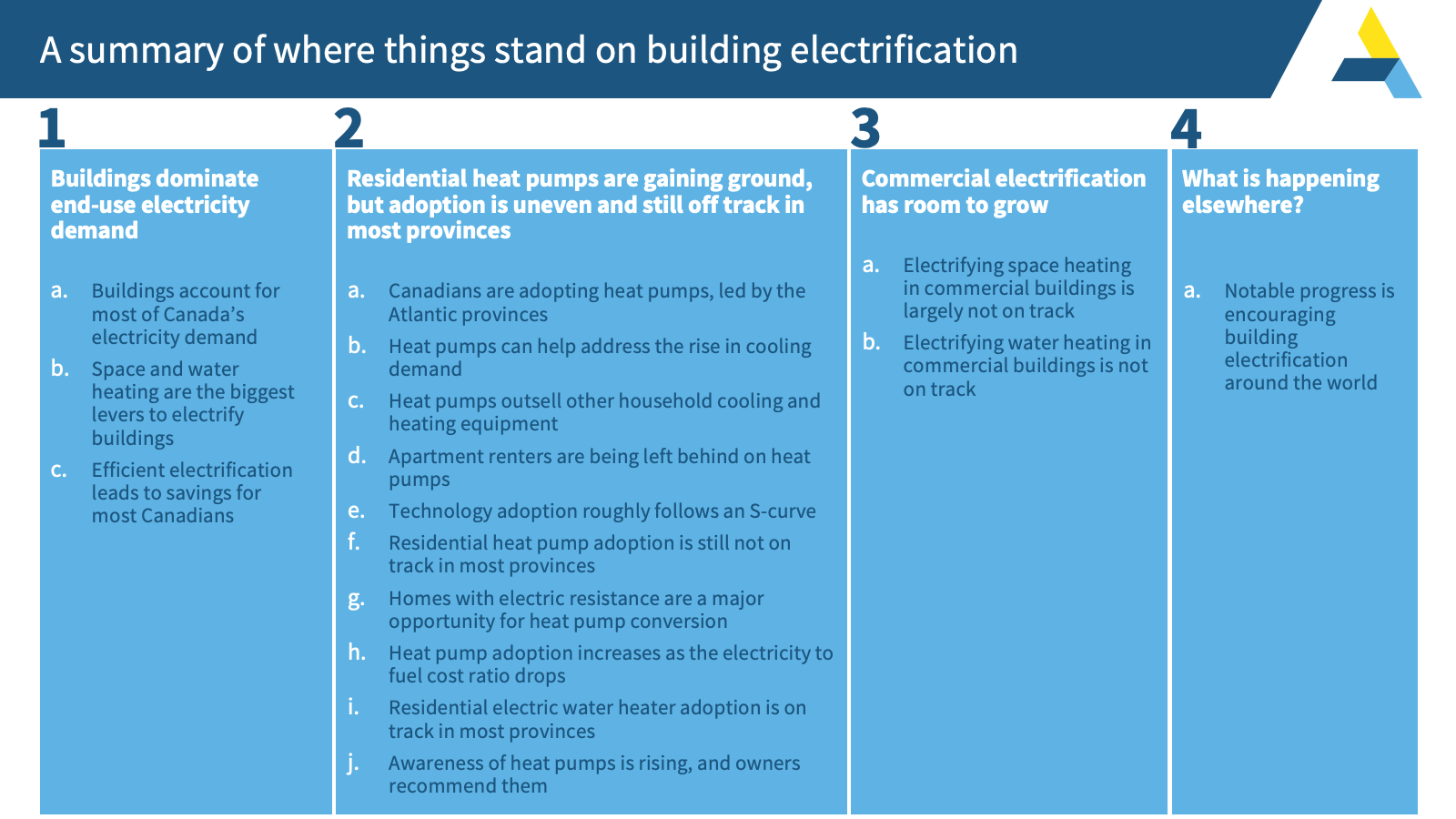
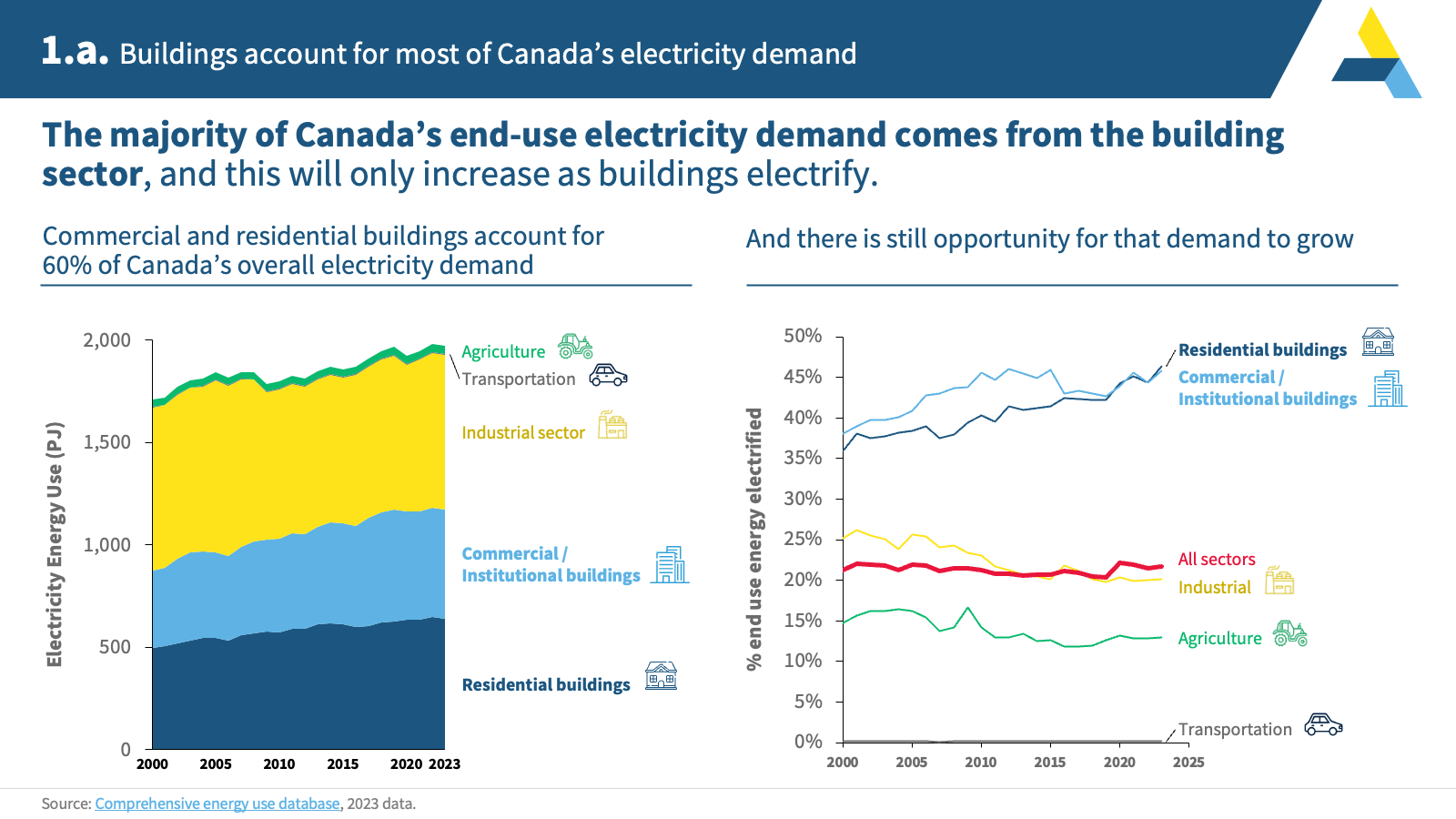
- Space and water heating are the largest sources of end-use energy demand in Canada’s building sector — and the highest-leverage areas for electrification.
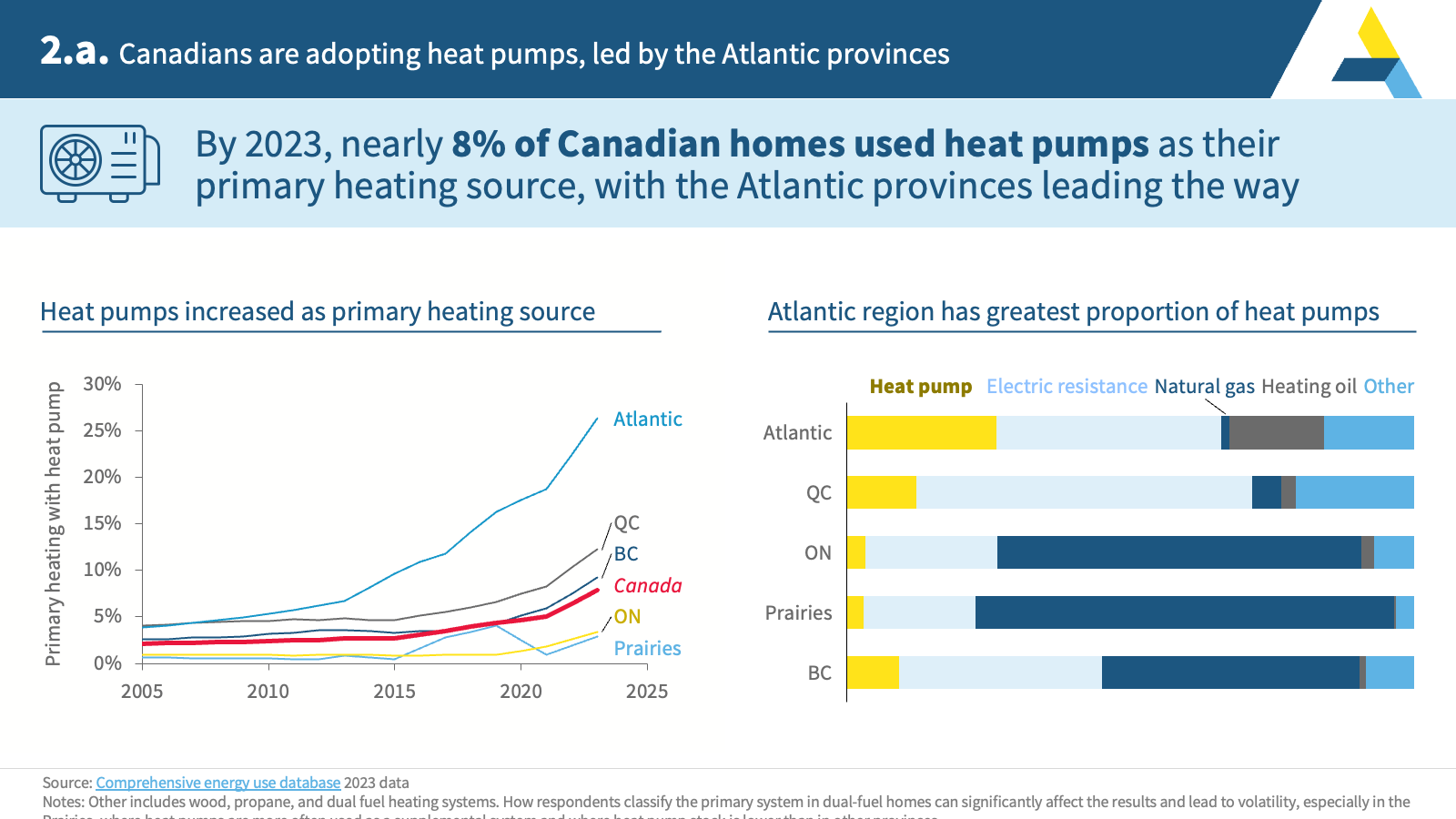
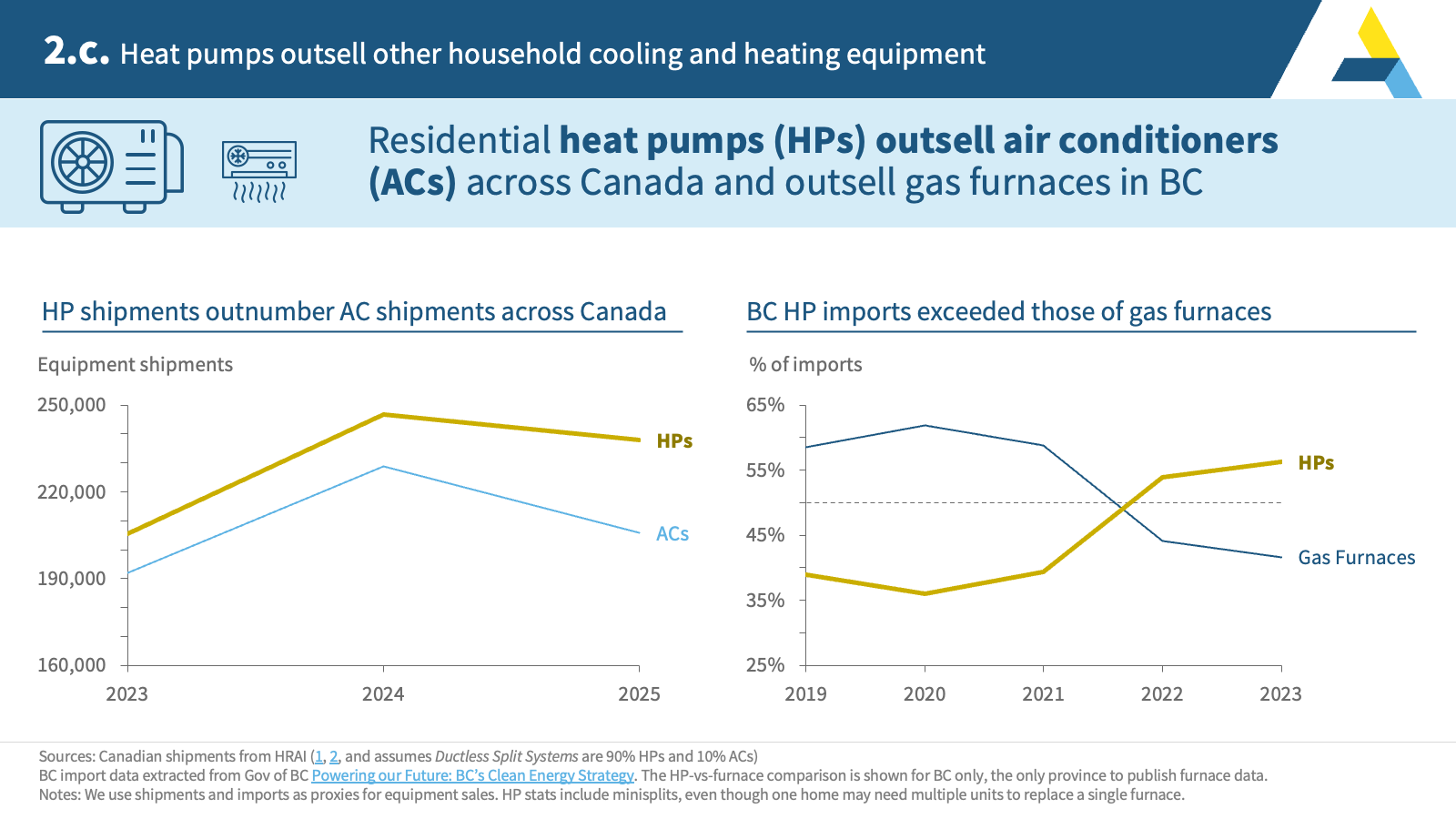
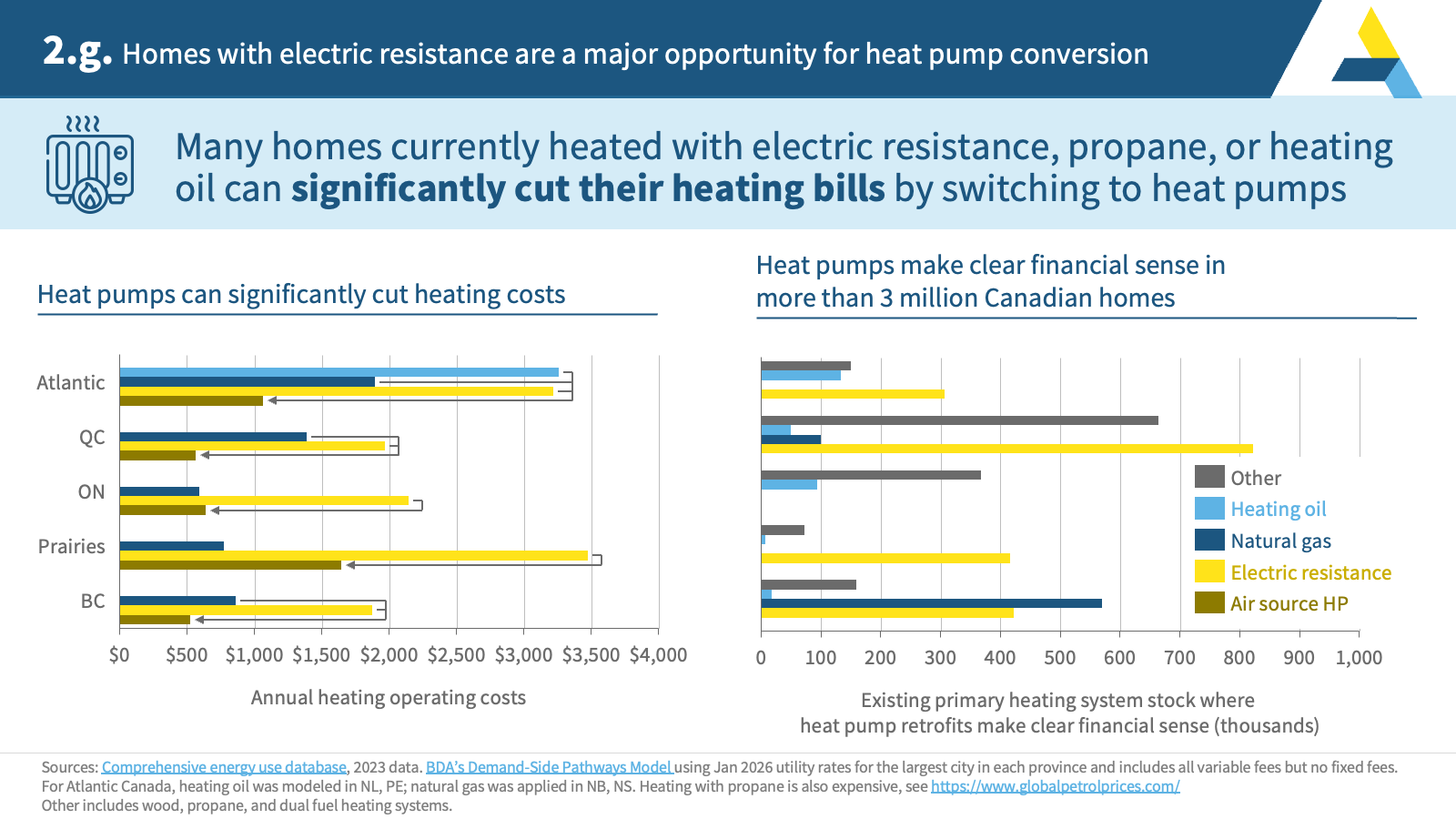
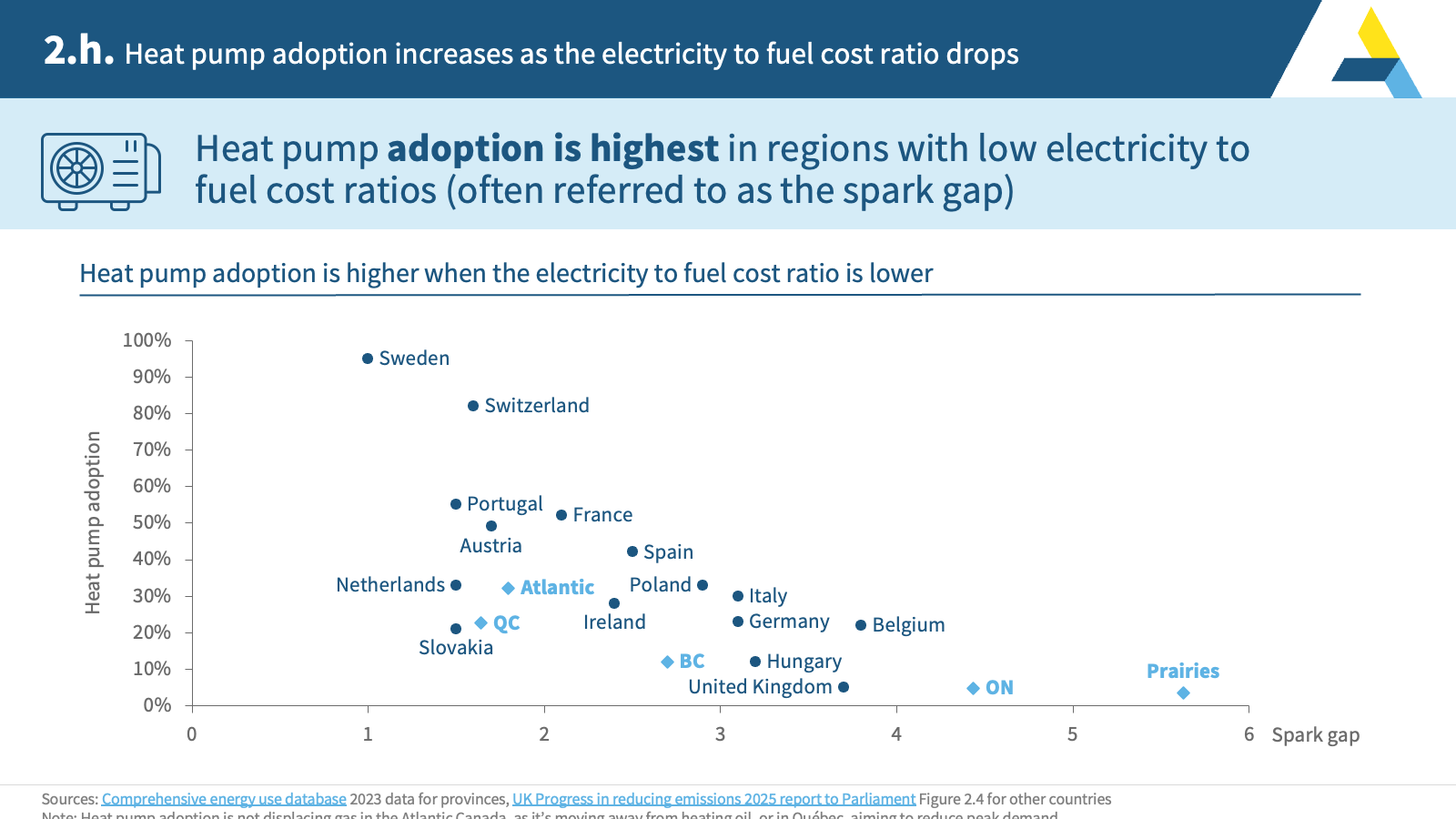
- Canadians are increasingly choosing heat pumps for residential heating and cooling. Heat pump shipments currently outnumber air conditioners across Canada, and heat pumps are the primary heating source in 8% of homes.
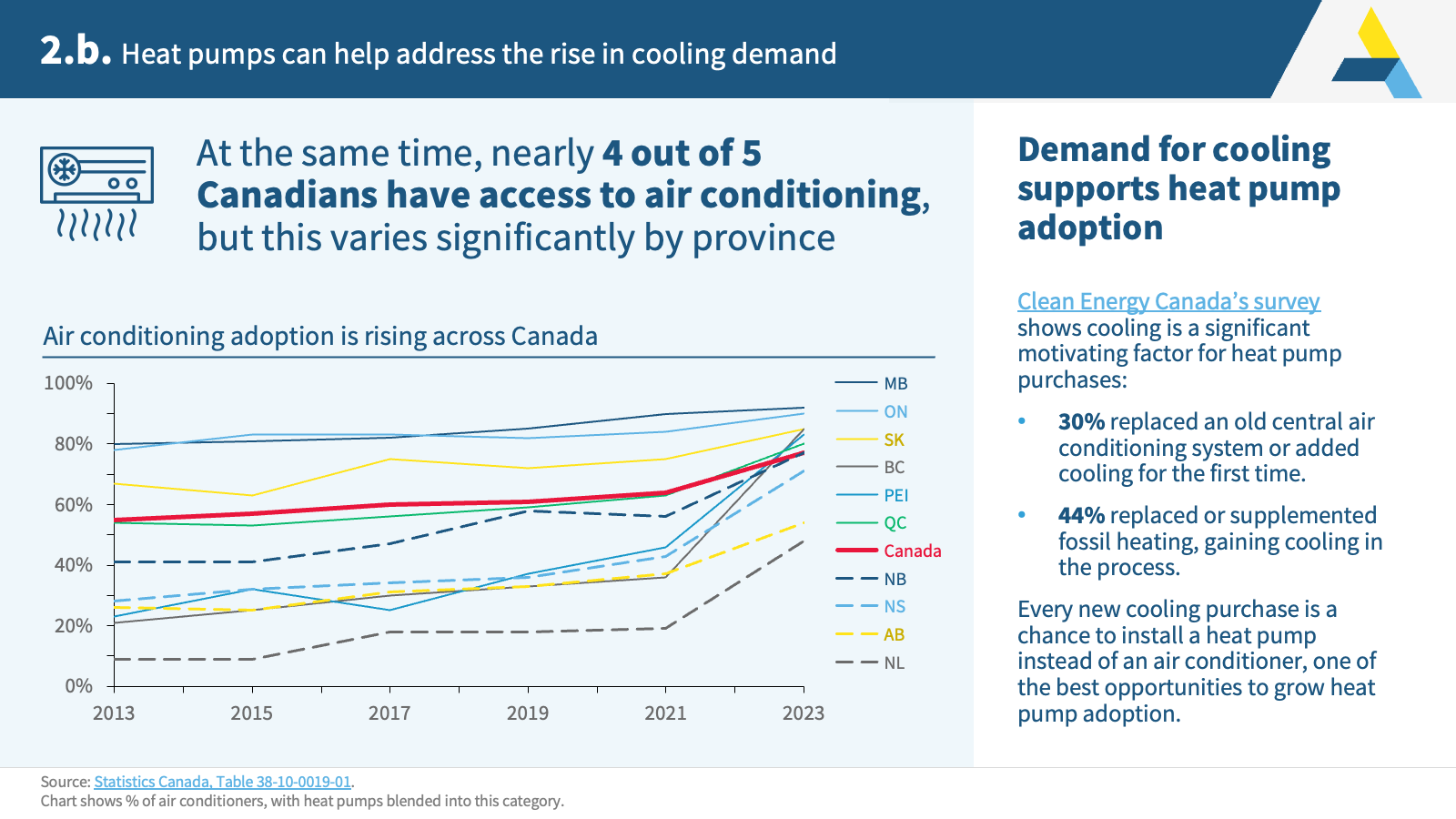
- Heat pumps can help address the rise in cooling demand: every new cooling purchase is a chance to install a heat pump instead of an air conditioner, one of the best opportunities to grow heat pump adoption.
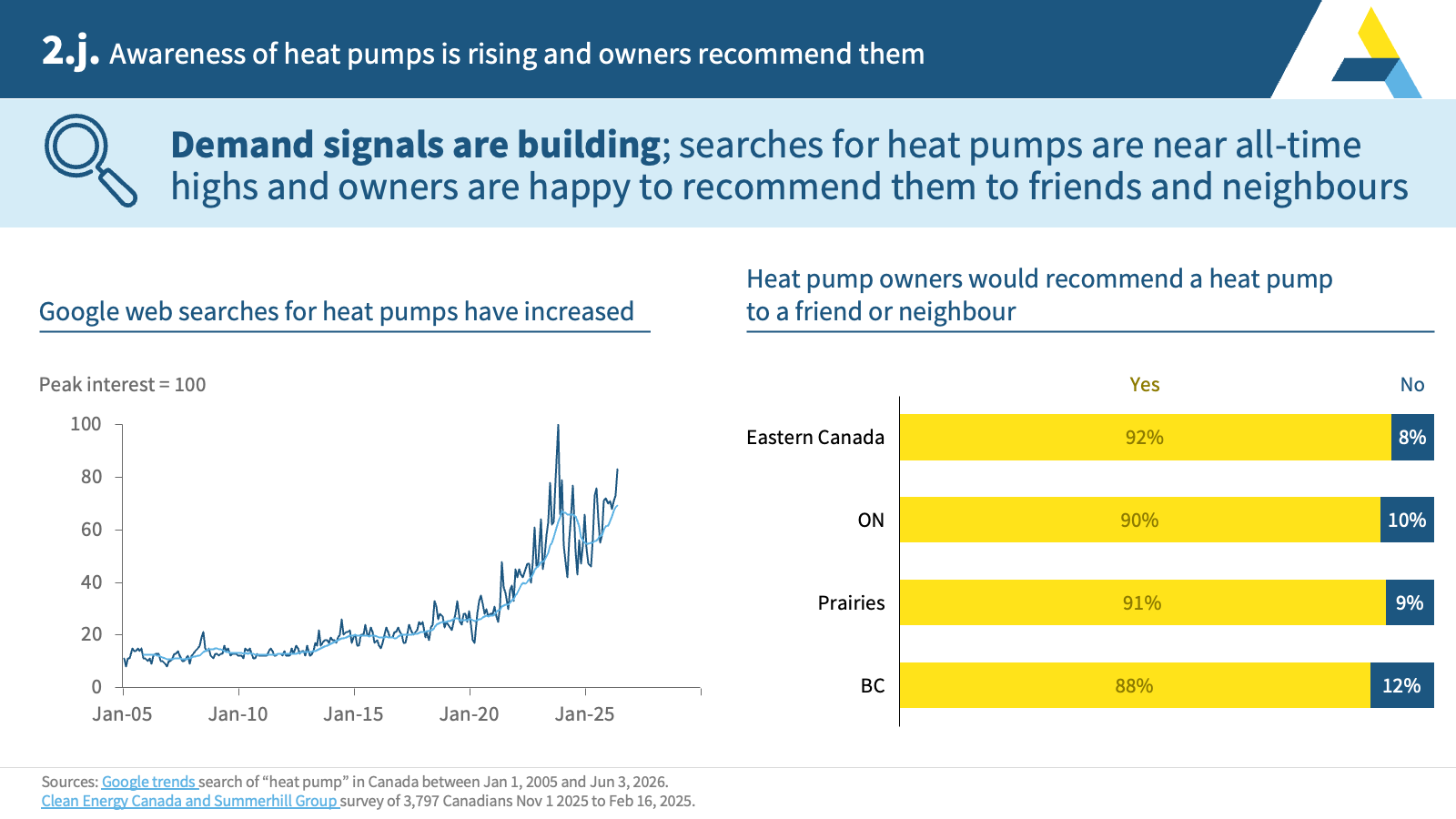
- Demand signals are building: awareness of heat pumps is rising and owners overwhelmingly recommend them.
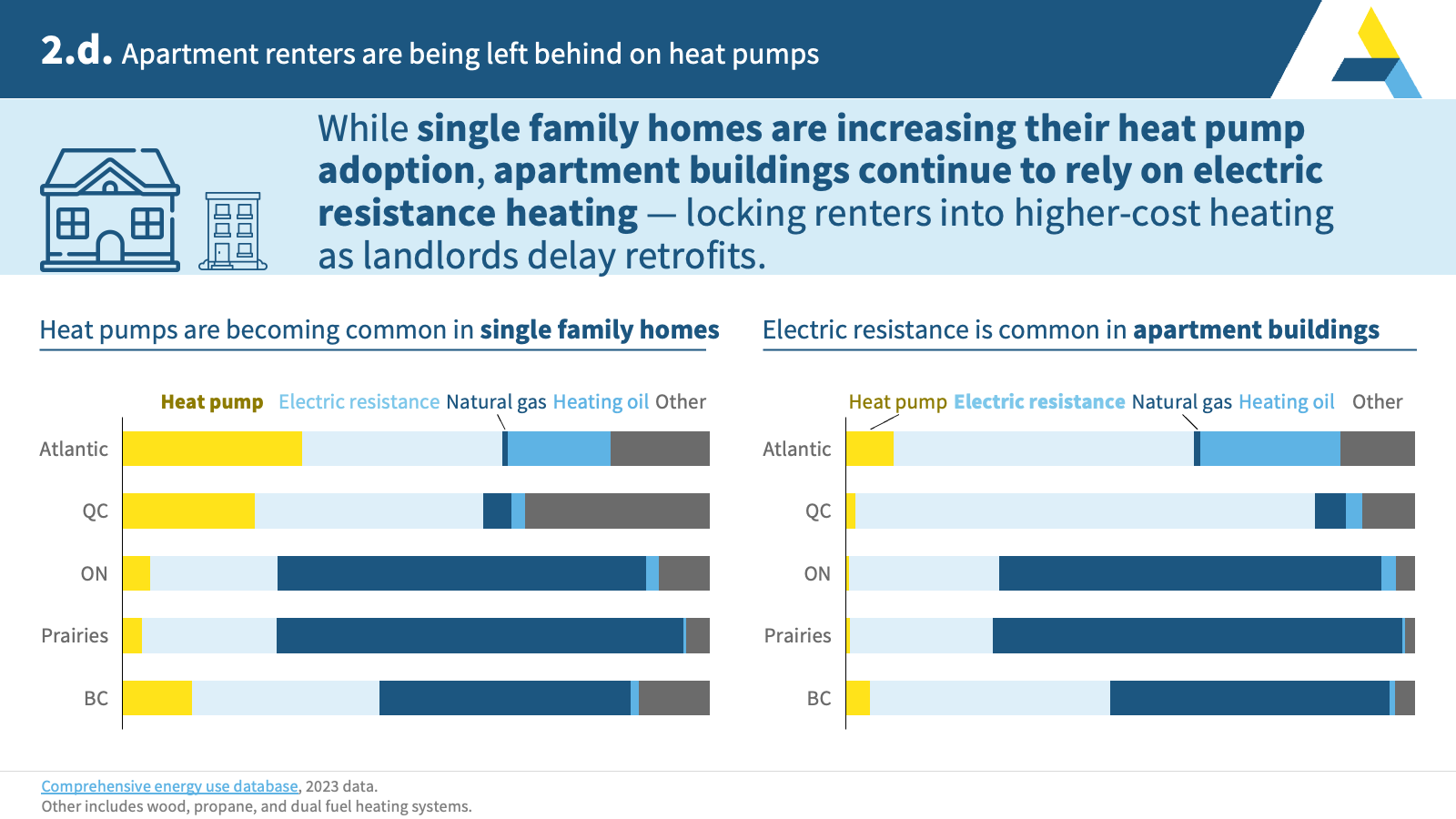
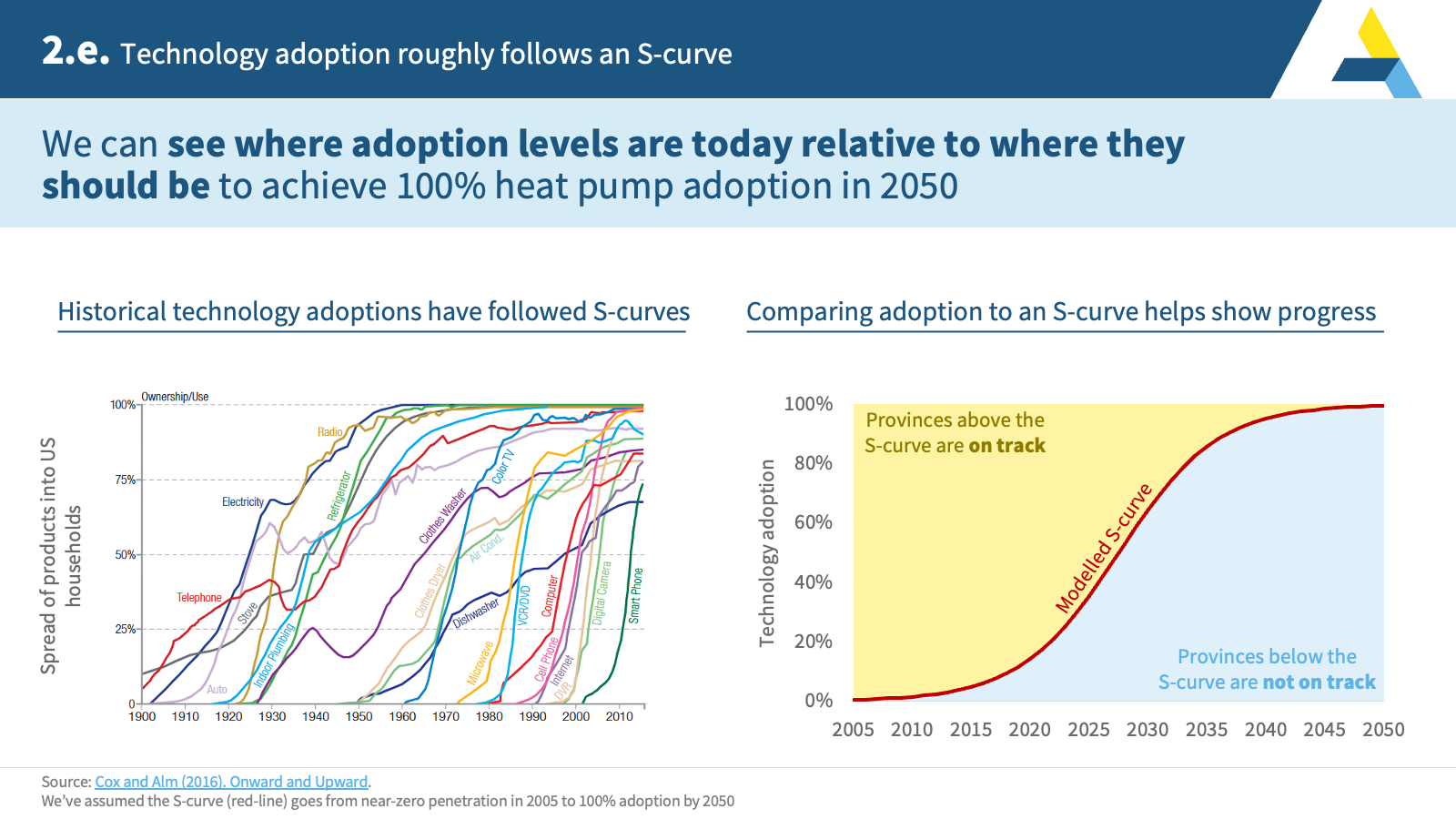
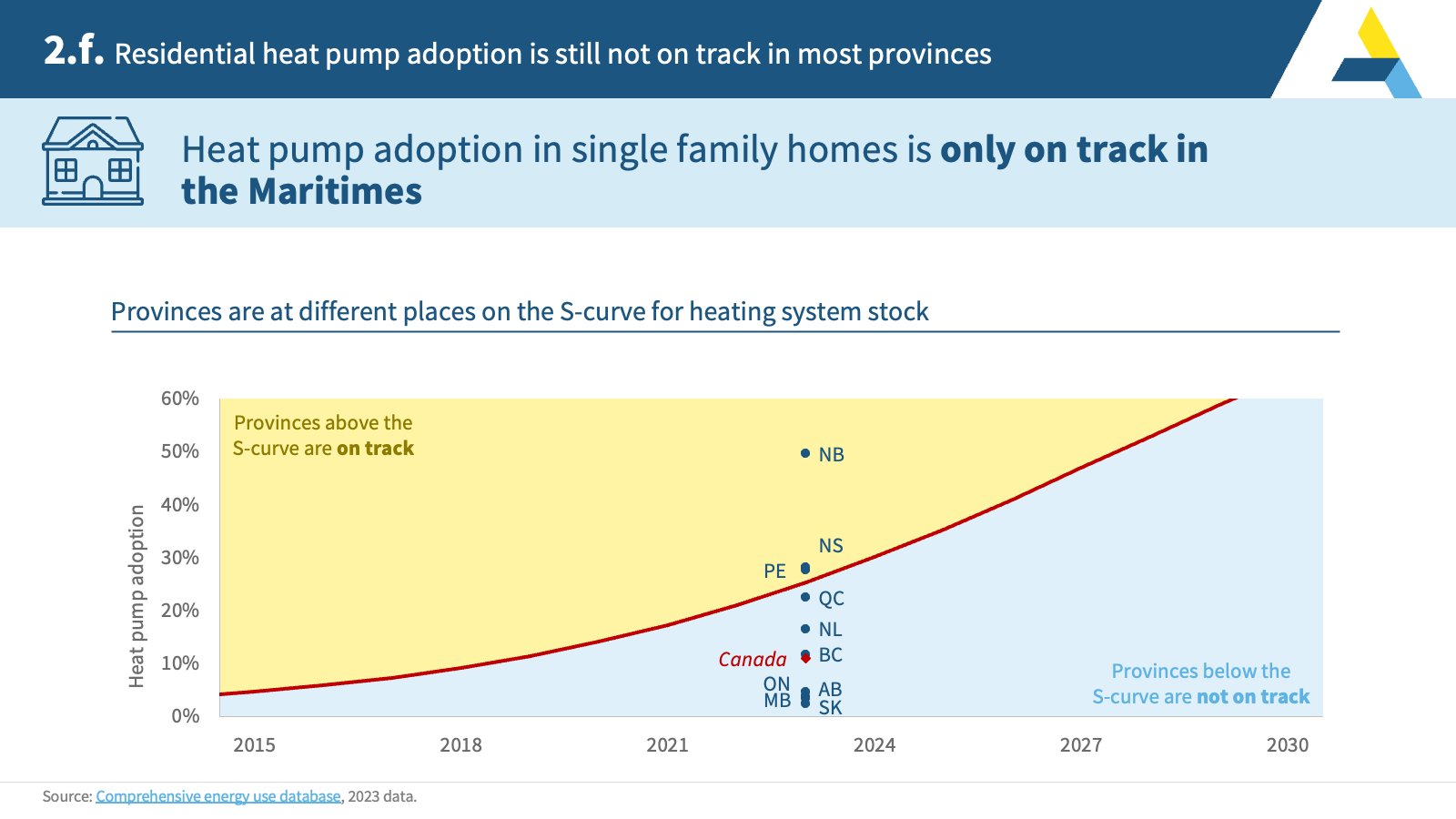
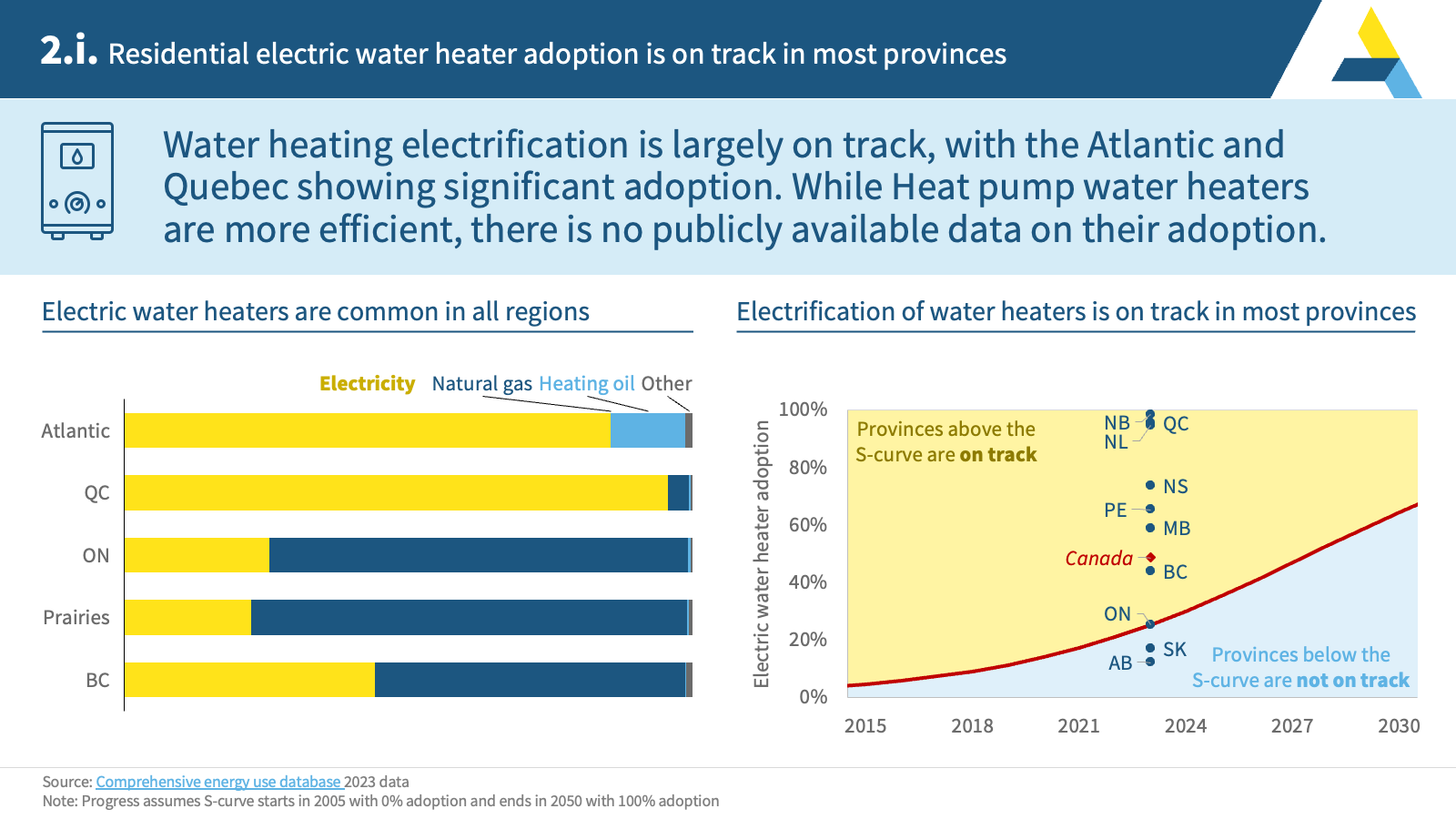
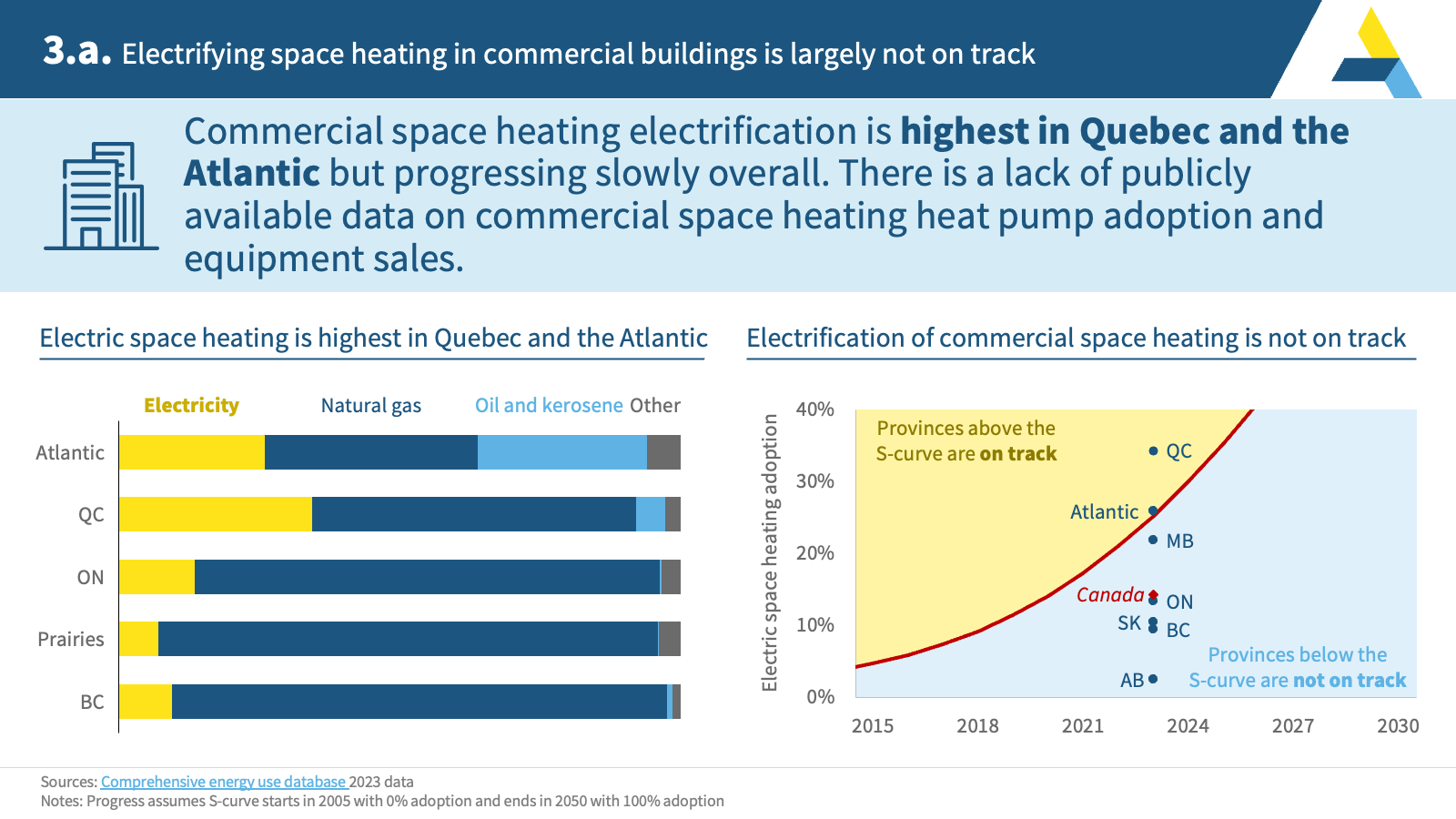
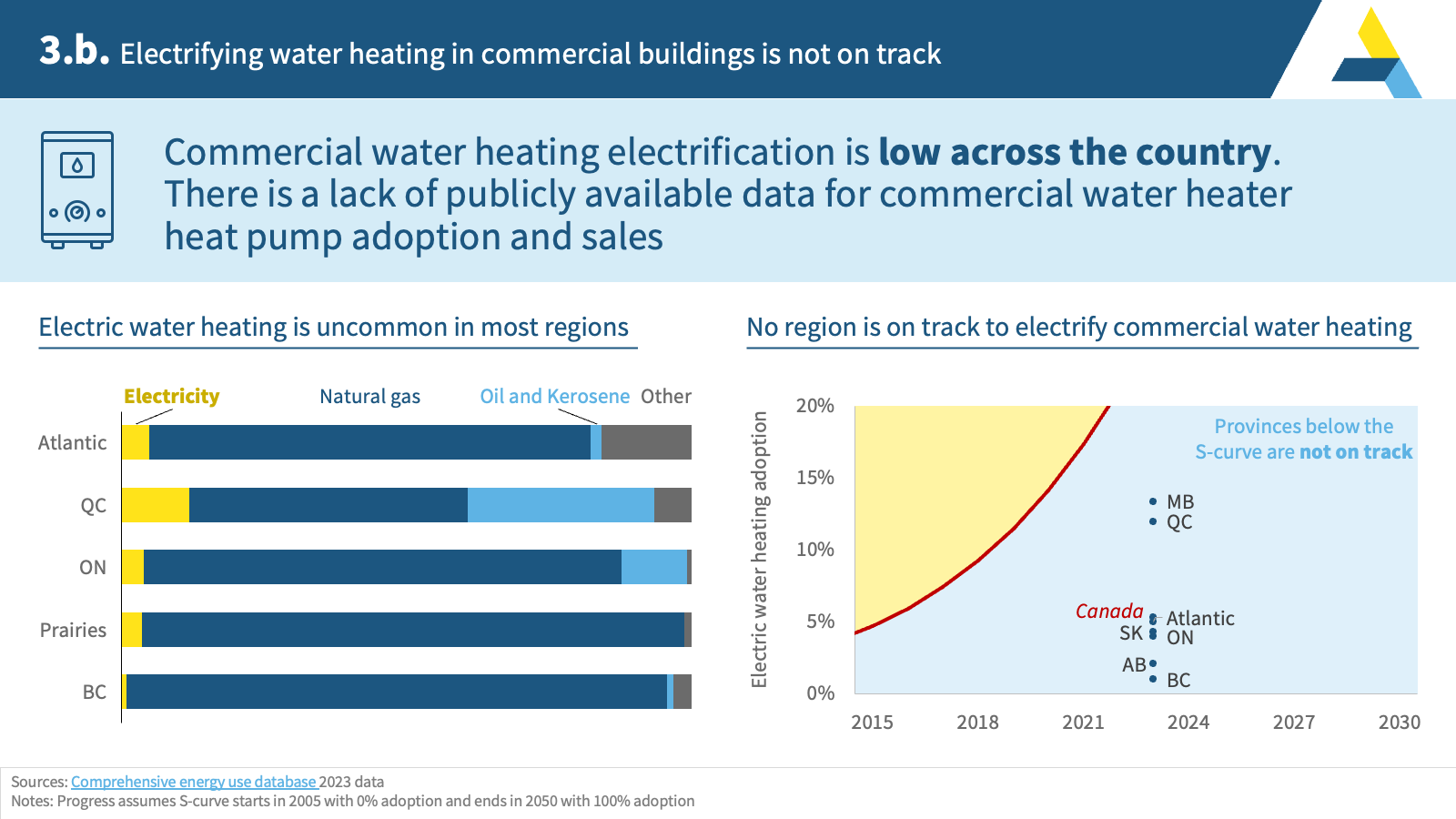
- Adoption is slower than needed in both residential and commercial heating and is regionally uneven. The Atlantic provinces are the only ones on track fully electrify space heating by 2050, water heating is even slower.
 Download individual slides (ZIP)